English
 русский
 Español
Quick Answer: Successful commercial site work and facility construction depend on coordinated civil engineering, utilities planning, and structural decisions—particularly whether to choose a metal building structure design or conventional concrete/masonry. Metal structures typically reduce build time by 30–50% and lower installed costs by 15–25% compared to traditional methods, making them the dominant choice for warehouses, distribution centers, manufacturing plants, and mixed-use commercial facilities.
- What Is Commercial Site Work and Why Does It Matter?
- Facility Construction: Planning for Long-Term Performance
- Metal Building Structure Design: Engineering Efficiency at Scale
- Metal Building vs. Conventional Construction: A Direct Comparison
- Integrating Site Work with Metal Building Construction
- Cost Breakdown: Commercial Site Work & Metal Building Facility
- Best Practices for a Successful Commercial Facility Build
- Frequently Asked Questions (FAQ)
- Conclusion: Building Smart from the Ground Up
What Is Commercial Site Work and Why Does It Matter?
Commercial site work encompasses all preparatory and civil construction activities performed on a piece of land before—and sometimes concurrent with—vertical construction. It forms the invisible foundation upon which every successful facility construction project rests.
Without properly executed commercial site work, even the most sophisticated structural design will fail. Poor grading leads to drainage problems; inadequate compaction creates settlement; undersized utility connections throttle operational capacity. Site work is rarely glamorous, yet it consistently represents 15–30% of total project cost for mid-size commercial builds.
Core Phases of Commercial Site Work
- Site Assessment & Geotechnical Investigation — Soil borings, percolation tests, environmental Phase I/II reviews, and topographic surveys establish baseline conditions and identify risks before a single dollar is committed to construction.
- Clearing & Demolition — Vegetation removal, tree clearing, and demolition of existing structures. Tree protection plans are often required by municipal ordinance.
- Rough Grading — Mass earthwork to establish design elevations, create positive drainage flow, and prepare subgrade for paving and building pads.
- Underground Utilities — Installation of sanitary sewer, storm drainage, water mains, gas lines, and electrical conduit in the proper sequence before surface improvements cover them permanently.
- Fine Grading, Paving & Concrete Flatwork — Parking areas, drive aisles, sidewalks, curb and gutter, and building slabs are installed to tight tolerances that directly affect ADA compliance and long-term serviceability.
- Landscaping & Final Site Restoration — Seeding, mulching, plantings, and stormwater best-management practices (bioswales, retention ponds) complete the site envelope.
Facility Construction: Planning for Long-Term Performance
Facility construction is far more than erecting walls and a roof. It is a systems-integration exercise that must account for current operational needs, future expansion, workforce flow, equipment loads, utility demand, and regulatory compliance—all at once.
Key Drivers of Facility Construction Decision-Making
| Decision Factor | Low Complexity | Medium Complexity | High Complexity |
| Occupancy Type | Storage / Warehouse | Light Manufacturing | Pharmaceutical / Food Processing |
| Clear Height Needs | 14–18 ft | 20–28 ft | 30 ft + |
| Structural Load Requirements | Light / Standard | Moderate (cranes to 10 T) | Heavy (cranes 20 T+, vibration) |
| Regulatory Burden | Standard building permit | Fire marshal, OSHA reviews | EPA, FDA, specialized certifications |
| Typical Timeline | 4–8 months | 8–14 months | 14–36 months |
Effective facility construction planning begins not with structural drawings but with an operational program: How many employees will the facility house? What is the daily truck door volume? Will overhead cranes be required? Are there hazardous material storage requirements? Answering these questions before engaging a structural engineer saves enormous time and prevents costly redesigns.
Delivery Methods for Facility Construction
Three primary project delivery methods are used in commercial facility construction:
- Design-Bid-Build (DBB): The traditional sequential method. Owner hires designer, produces complete documents, then publicly bids construction. Lowest risk for scope certainty, but the longest path to groundbreaking.
- Design-Build (DB): A single entity handles design and construction under one contract. Faster, better cost certainty, ideal for metal building projects where the fabricator often drives design.
- Construction Manager at Risk (CMAR): CM joins the team early, provides preconstruction services including cost modeling, then holds subcontract risk. Best for complex facilities with significant owner-driven scope evolution.
Metal Building Structure Design: Engineering Efficiency at Scale
Metal building structure design has evolved from simple agricultural sheds into sophisticated engineered systems that satisfy the most demanding commercial and industrial requirements. Today, pre-engineered metal buildings (PEMBs) account for more than 60% of all new low-rise non-residential construction in North America, a dominance driven by speed, cost, and adaptability.
How Metal Building Structure Design Works
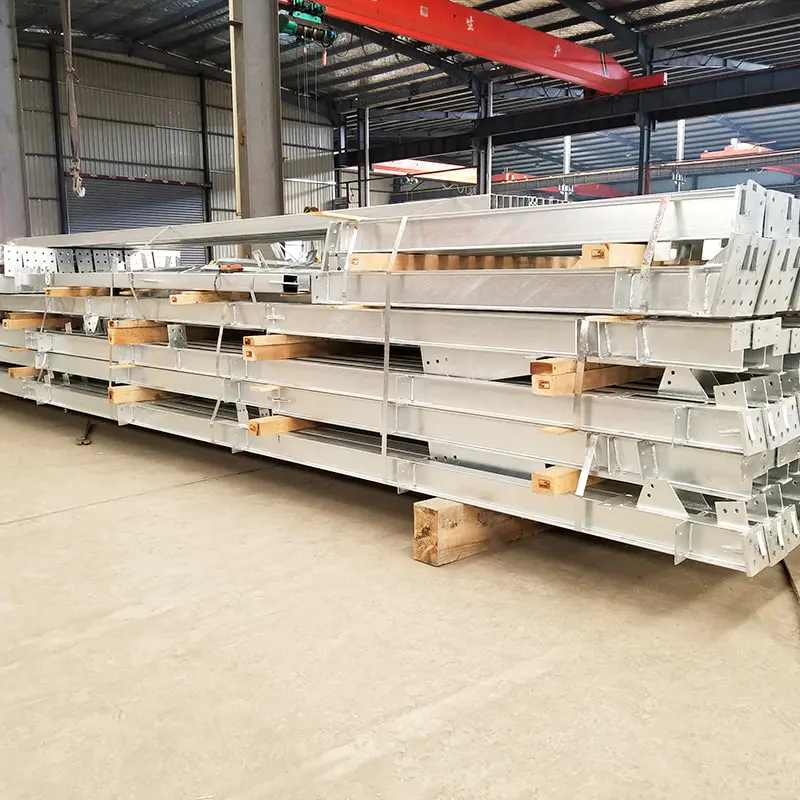
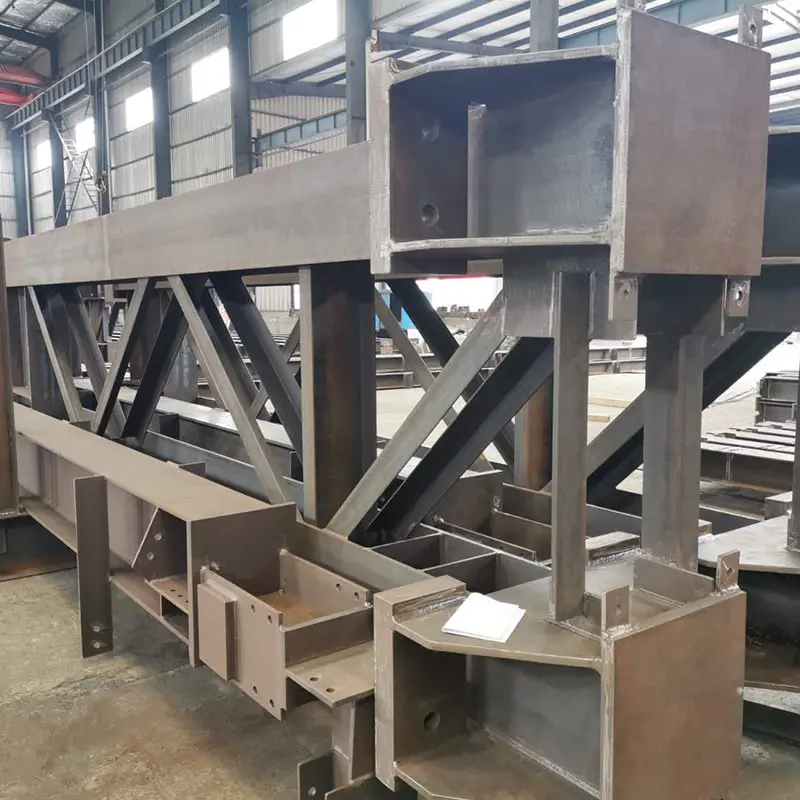
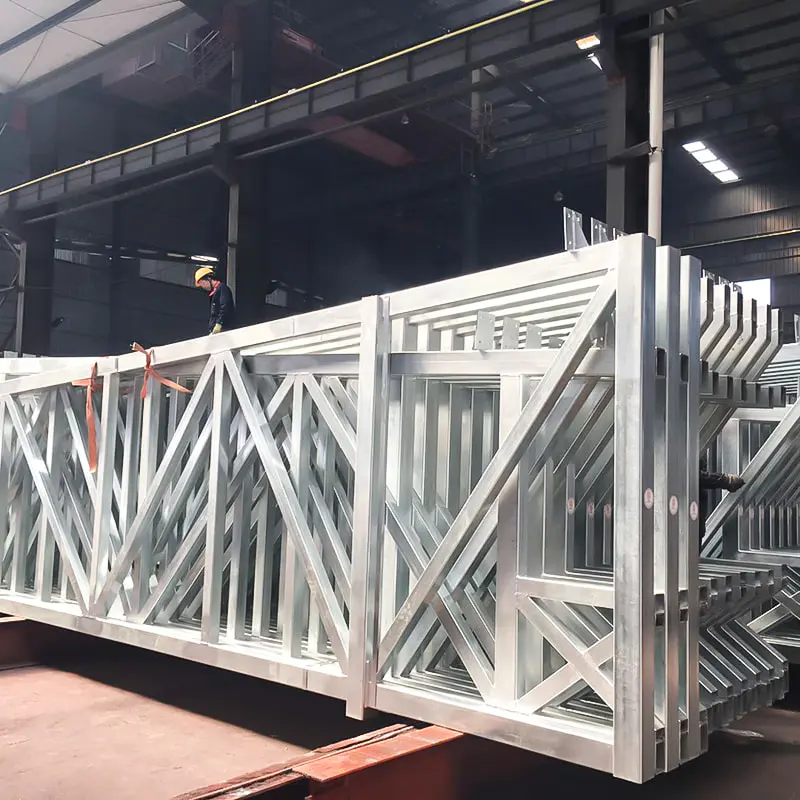
Unlike conventional construction where every structural member is designed independently, metal building structure design is a system-based approach. The primary structural frame—typically rigid-frame or tapered-column clear-span systems—is engineered by the manufacturer's structural team to precise project loads. Secondary framing (purlins, girts, eave struts) and cladding (standing-seam metal roof panels, wall panels) are also factory-designed to integrate with the primary frame as a single load path.
The engineering basis for any metal building structure design project starts with the building codes applicable in the jurisdiction—most commonly the International Building Code (IBC), ASCE 7 for loads, and AISC 360 for steel design. The manufacturer's engineers translate site-specific wind, snow, seismic, and collateral loads into optimized member sizes. Because members are fabricated in controlled factory conditions, tolerances are tighter than field-welded structures, contributing to faster erection and more predictable performance.
Primary Frame Systems in Metal Building Structure Design
- Single-Slope (Lean-To) Frame: One sloped roof plane draining to one side. Low cost, simple design; used for smaller commercial additions or auxiliary structures.
- Symmetrical Double-Slope Clear-Span: No interior columns; maximum floor flexibility. Clear spans to 300+ feet are achievable. The workhorse of distribution and manufacturing facility construction.
- Multi-Span Rigid Frame: Interior columns subdivide the roof into bays, reducing member depth and steel weight. Cost-effective for very wide buildings where unobstructed span isn't required.
- Tapered Beam / Post Frame: Tapered rafters provide efficient steel usage across varying moment demands along the rafter span. Standard in most modern metal building designs.
- Modular Expandable Frame: Designed from the outset to add bays longitudinally or widen spans later. Critical for facility construction where growth is planned.
Metal Building vs. Conventional Construction: A Direct Comparison
Choosing between metal building structure design and conventional construction (concrete tilt-up, masonry, or structural steel moment frames) is one of the most consequential decisions in commercial site work and facility construction planning.
| Criteria | Metal Building Structure Design | Conventional Construction |
| Design & Engineering Lead Time | 4–10 weeks (factory engineering) | 10–24 weeks (full custom design) |
| Material Cost (per sq ft installed) | $18–$35 (structure only) | $28–$55 (structure only) |
| Construction Speed | 30–50% faster than conventional | Baseline reference |
| Clear Span Capability | Up to 300+ ft economically | 100–150 ft economically |
| Expandability | Excellent (add bays at endwall) | Difficult, costly demolition |
| Aesthetic Flexibility | Good (masonry, glass, panel options) | Excellent (unlimited facade options) |
| Crane Compatibility | Designed-in, up to 50+ tons | Custom engineered, higher cost |
| Energy Performance (roof) | Superior with standing-seam + insulation | Variable by system |
| Seismic Performance | Good (braced frame) | Excellent (moment frame, shear wall) |
| Maintenance Cycle | Periodic re-caulking, recoating | Masonry: low; wood: higher |
The data is clear: for commercial site work projects where speed-to-occupancy and cost certainty are paramount, metal building structure design delivers decisive advantages. High-seismic zones (California, Pacific Northwest) or high-security/prestige applications may warrant conventional alternatives.
Integrating Site Work with Metal Building Construction
One of the most common and costly mistakes in facility construction is treating commercial site work and vertical structure as independent scopes. In reality, they are deeply interdependent—especially when a metal building structure design is involved.
Critical Coordination Points
- Anchor Bolt Layout: The metal building manufacturer releases certified anchor bolt drawings that must be reflected precisely in the concrete foundation before any steel arrives on site. A misplaced anchor bolt can delay a $5M project by weeks.
- Slab-on-Grade Specifications: Floor flatness (FF) and levelness (FL) numbers are set by the building's operational requirements—typically FF 35/FL 25 for standard warehouse use, and FF 50/FL 45 for narrow-aisle rack storage. Commercial site work contractors must understand these tolerances before placing concrete.
- Utility Stub-Up Locations: Conduit, plumbing rough-ins, and gas lines must be positioned relative to column lines defined by the metal building structure design. Coordinate early to avoid core drilling through post-tensioned slabs.
- Grading & Drainage at Dockwells: Truck dock locations are fixed by the steel structure. Site grading must establish proper drainage away from dockwell pits before concrete aprons are poured.
- Crane Access During Erection: The steel erection contractor needs hardened, stable ground to support crawler or all-terrain cranes during facility construction. The site work schedule must account for this sequence.
Cost Breakdown: Commercial Site Work & Metal Building Facility
Understanding where money goes in a combined commercial site work and metal building structure design project helps owners allocate contingency and prioritize value engineering.
| Cost Category | % of Total Project Cost | Typical Range (per sq ft) | Key Variables |
| Site Work & Civil | 15–28% | $8–$22 | Topography, soil conditions, utility distance |
| Foundation & Concrete | 10–18% | $6–$15 | Slab thickness, bearing capacity, frost depth |
| Metal Building Package | 20–30% | $12–$28 | Clear span, height, cladding type, accessories |
| Erection Labor | 8–14% | $4–$10 | Building complexity, local labor rates |
| MEP Systems | 15–25% | $8–$22 | Occupancy, process loads, HVAC complexity |
| Interior Buildout | 5–15% | $3–$14 | Office portion, finishes, dock equipment |
| Soft Costs (Design, Permits, FF&E) | 8–12% | $4–$10 | Jurisdiction, project complexity |
Best Practices for a Successful Commercial Facility Build
1. Conduct a Thorough Pre-Development Site Analysis
Before committing to any commercial site work budget, invest in geotechnical borings, a Phase I environmental assessment, and a wetlands delineation. Discovering unsuitable soil or a FEMA floodplain encroachment during construction is far more expensive than discovering it before contracts are signed.
2. Engage the Metal Building Manufacturer Early
Waiting until design development is complete to select a metal building supplier is a common mistake. Early engagement allows the metal building structure design team to flag clearance requirements, anchor bolt configurations, and wind/snow load assumptions that will affect the civil design and foundation engineering simultaneously.
3. Budget Adequate Contingency by Phase
A 10% contingency on commercial site work is appropriate given the high variability of below-grade conditions. Structure and MEP can typically be held to a 5–7% contingency when the design is well-developed. Blending these into a single project contingency often leads to site-work overruns burning money intended for interior finishes.
4. Plan for Expansion from Day One
One of the greatest advantages of metal building structure design is that expansion bays can be added longitudinally at low marginal cost—provided the end frame was designed as an "expandable" frame from the start. Upsizing the site's utility infrastructure by 25–50% at initial facility construction is typically much cheaper than retrofitting later.
5. Prioritize Schedule Alignment Across All Trades
The steel erection crew cannot begin until the slab-on-grade has achieved the specified compressive strength. The MEP rough-in cannot begin until primary structural framing is complete. A master project schedule—updated weekly and shared with all subcontractors—is the most effective tool for preventing costly idle time on large facility construction projects.
Frequently Asked Questions (FAQ)
Conclusion: Building Smart from the Ground Up
Exceptional facility construction outcomes begin with exceptional commercial site work—and are realized through disciplined, coordinated metal building structure design. Each phase reinforces the others: a well-prepared site makes for faster, more economical foundations; precise foundation work makes for faster steel erection; and a correctly designed metal building system delivers the operational performance owners depend on for decades.
Owners and project managers who understand the interdependencies between civil site work, structural engineering, and metal building structure design are positioned to make faster decisions, negotiate stronger contracts, and avoid the budget overruns that plague projects where these disciplines are managed in silos.
Whether you are breaking ground on a 20,000 sq ft distribution center or a 500,000 sq ft advanced manufacturing campus, the principles are the same: plan thoroughly, coordinate early, and build to last.